
According 2024 report, 72% of new print-on-demand sellers quit within the first 6 months due to poor pricing strategies — either pricing too low and losing profit, or pricing too high and losing customers.
In contrast, the top 8% of successful sellers share one major advantage:
They use a data-driven pricing model that consistently generates 18% – 42% profit margins.
So:
How do you price print-on-demand products correctly?
What are the key pricing factors?
How do leading brands price apparel, mugs, and canvas?
What strategies maximize profit while keeping customers happy?
This is the ultimate, step-by-step guide to POD pricing, written for sellers, creators, and brands using the Printeby ecosystem.
1. The Foundations of Print-on-Demand Pricing
POD pricing is NOT just:
“Base cost + a little profit”.
That’s outdated.
Modern POD businesses use layered pricing frameworks based on real data — used by Redbubble, Teespring, Etsy’s top 1% sellers, and Printeby store owners.
Pricing POD products requires 4 essential layers:

LAYER 1 – Cost-Based Pricing (your foundation)
Includes:
- Base product cost
- Printing cost
- Shipping cost
- Platform transaction fees
- Ad costs (if any)
This is your starting point, not your final price.
LAYER 2 – Value-Based Pricing (what customers feel your product is worth)
Your customer doesn’t care what it costs you.
They pay based on:
- Emotional appeal
- Art quality and originality
- Brand value
- Perceived uniqueness
- Story behind the design
On Printeby, for example:
Unique chibi artwork allows sellers to price 25–40% higher than average POD stores.
LAYER 3 – Competitor-Based Pricing (fit your price into the market)
Look at your niche and platform competitors.
2025 Market Data:
| Product Type | US Avg Price | EU Avg Price | Strong Sellers |
|---|---|---|---|
| T-shirt | $19.99–$29.99 | $17.99–$27.99 | $24.99–$32.99 |
| Hoodie | $34.99–$59.99 | $39.99–$64.99 | $49.99–$69.99 |
| Mug 11oz | $12.99–$19.99 | $11.99–$21.99 | $16.99–$25.99 |
| Canvas | $29–$59 | $25–$49 | $49–$89 |
LAYER 4 – Psychological Pricing (price the way the human brain prefers)
Prices that end with “.99” convert 8–12% higher (Nielsen 2023).
Golden POD price points:
- $19.99
- $22.99
- $24.99
- $29.99
- $34.99
2. Key Factors That Shape POD Pricing

2.1. Production Cost
Includes:
- Base cost
- Printing method (DTG, DTF, UV…)
- Print size
- Number of print areas
- Fulfillment fees
- Artwork license cost
This determines your minimum price floor.
2.1. Production Cost
Includes:
- Base cost
- Printing method (DTG, DTF, UV…)
- Print size
- Number of print areas
- Fulfillment fees
- Artwork license cost
This determines your minimum price floor.
2.2. Artwork Quality & Originality
Art is 70% of the value in POD.
On Printeby:
- Exclusive chibi artworks → T-shirts can sell for $29.99–$34.99
- Generic AI artworks → $22.99–$27.99
A strong design can increase product value by 200–400%.
2.3. Shipping Cost
Shipping contributes 15–40% of total POD expenses.
Etsy 2024 data shows stores offering Free Shipping see:
- +17% conversion rate
- +23% revenue increase
But only if shipping cost is included properly inside product price.
2.4. Customer Location (Geo-Pricing)
US, UK, EU customers pay 20–45% more than Asian buyers.
2.5. Brand & Exclusivity Premium
Strong niche = Higher price tolerance
- Anime
- Chibi
- Kawaii lifestyle
- Pet lovers
Printeby sellers frequently achieve +30% higher pricing thanks to branded chibi artwork.
Explore real examples:
https://printeby.com/shop/
3. Accurate POD Pricing Formulas

Formula 1 :Simple Margin Method (Beginner-Friendly)
Selling Price = Total Cost / (1 – Desired Profit Margin)
Example:
- Total cost: $16
- Desired margin: 30%
→ $16 / (1 – 0.30) = $22.85 → $22.99–$24.99
Formula 2:Market-Fit Pricing
Selling Price = Market Average × Differentiation Multiplier
Multipliers:
- Unique artwork: ×1.2
- Themed collection: ×1.15
- Limited edition: ×1.3
Formula 3 :Value-Based Pricing (Best for Emotional Niches)
For:
- Chibi
- Anime
- Personalized gifts
Customers pay:
- +40% for cute/kawaii art
- +65% for personalized gifts
4. POD Pricing Strategies Used by Top Sellers

4.1. Good – Better – Best (GBB Pricing)
Offer 3 tiers:
| Tier | Price | Purpose |
|---|---|---|
| GOOD | lowest | attract new customers |
| BETTER | standard | best conversion rate |
| BEST | highest | collectors & loyal buyers |
4.2. Free Shipping Strategy
Raise retail price slightly → offer Free Shipping → higher conversion.
4.3. Seasonal Pricing
- Holidays: +10–15%
- Off-season: –5%
4.4. Bundle Pricing (AOV Booster)
Examples:
- Buy 2 shirts → 10% off
- Buy 3 mugs → 15% off
AOV increases 18–32%.
4.5. Limited Edition Pricing
Chibi limited editions can sell +50% higher.
5. Optimizing Prices With Real Data

5.1. Conversion Rate Indicators
- <2% = too high
- 2–4% = good
- 4% = price too low → raise price
5.2. Device-Based Pricing Insight
- Mobile shoppers → more price sensitive
- Desktop shoppers → spend 12–21% more
5.3. A/B Price Testing
Test:
- $24.99 vs $27.99
Whichever yields higher profit (not revenue) wins.
5.4. Customer Review Signals
- “Too expensive” → more than 10 comments = lower price
- “Great quality for the price” → keep price
- “I bought more” → raise price
6. Practical Tips for the Perfect POD Pricing Strategy

1. Start with profit goals first
Organic sales: 20–35%
Paid ads: 40–60%
2. Adjust price by region
- US: +20%
- EU: +15%
- Asia: lower or free shipping
3. Use psychological pricing always
Avoid round numbers.
4. Sell exclusive artwork
Printeby allows creators to open stores and sell chibi art:
https://printeby.com/stores/
5. Never compete by lowering prices
Compete with:
- Art quality
- Story
- Experience
- Limited editions
7. Real Price Examples for POD Products
7.1. Chibi T-Shirts
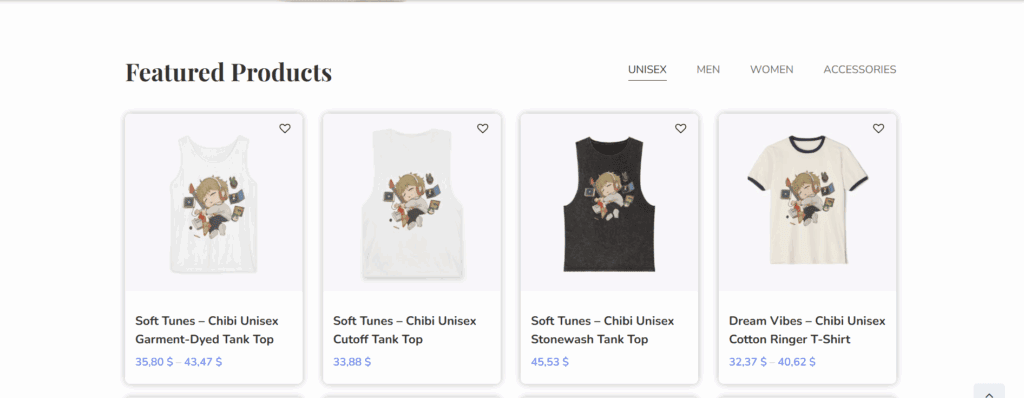
Costs:
- Base: $11–13
- Shipping: $4–5
Recommended:
- Organic: $24.99–29.99
- Ads: $29.99–34.99
Sample product:
https://printeby.com/unisex/gaming-time-chibi-unisex-softstyle-t-shirt/
7.2. Hoodies
Base cost: $22–29
Recommended price: $44.99–59.99
7.3. Mugs
Base: $6–8
Ship: $5
Recommended: $16.99–22.99
Sample:
https://printeby.com/accessories/meow-ning-energy-chibi-ceramic-mug/
7.4. Journals
Market price: $17–27
Sample:
https://printeby.com/accessories/oops-moment-whoa-cat-chibi-hardcover-journal-matte/
8. Conclusion : Pricing Is the Profit Engine of Your POD Business
Correct pricing helps you:
- Profit consistently
- Avoid price wars
- Scale ads
- Build a brand
- Increase AOV and LTV
- Reduce refunds
Wrong pricing leads to:
- Losing customers
- Losing money
- Zero scalability
- Business collapse
Price with data — not emotions.
Explore Printeby products & pricing inspiration:
https://printeby.com/shop/
FAQ — Print-on-Demand Pricing
1. What is the ideal profit margin for POD?
- Organic traffic: 20–35%
- With ads: 40–60%
2. Should I use fixed or dynamic pricing?
Use a hybrid:
- Fixed for evergreen products
- Dynamic for campaigns & seasonal drops
3. How do I compete without lowering my price?
- Better artwork
- Better branding
- Better storytelling
- Better experience
4. Should I include shipping in the retail price?
Yes — for Free Shipping listings.
Raise product price slightly to cover shipping.
5. How often should I increase prices?
5–12% yearly to match inflation and rising base costs.
Start your print-on-demand business today with Printeby — and turn your creativity into real income.
https://printeby.com/